



|
|
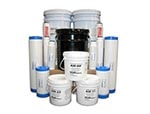
Membrane Chemicals Using FLOCON® 135 And FLOCON® 260
The amount of Flocon required to inhibit scale formation
depends on the degree of supersaturation of the insoluble salts at the point of highest
concentration in the system. the degree of supersaturation in turn depends on the
concentration of the ionic species in the feedwater, the overall salinity of the feed, the
temperature of the feedwater, the percentage of the feedwater recovered as permeate and
the type of membrane used for the application.
* Use soft water or RO permeate to mix with Flocon.
Flocon should be added to a membrane system prior to the final cartridge filer. If media filtration or activated carbon is used, Flocon should be applied after these treatment stages. Flocon should be delivered by dosing pump from a dilution tank, direct from the drum or from a bulk storage facility, into the feedwater at a rate that is determined by the size of the membrane system, the recommended dose rate and the delivery range of the dosing pump. It is recommended that the dosing pump be adjusted by stroke length, while maintaining stroke frequency at s high a level as possible to achieve even distribution of the Flocon in the membrane system feedwater.
This page was last updated
08/12/08 | |||||||||||||||||||||
|
Copyright © 2010 Applied Membranes, Inc. All Rights Reserved.
[Contact Us] [How to Purchase our Products] [Download Catalog] [Download Manuals] [Download Forms & Product Literature] [Track an Order] [Membranes] [RO Systems] [Seawater Desalination Systems] [Water Treatment Systems] [Media Filtration] [Water Softeners] [Iron Filters] [Filters & Housings] [Membrane Housings/Pressure Vessels] [Residential Components] [Pumps] [Membrane Chemicals] [Ultraviolet] [Water Quality Test Equipment] [About Applied Membranes] |